
A full day of school asks kids to sustain directed attention for hours. Attention Restoration Theory holds that this kind of focus is a limited resource, and it recovers through effortless, self-chosen activity (Kaplan, 1995). Unstructured play can provide children with an opportunity for that mental reset.
Self-determination theory, one of psychology’s most well-established frameworks, identifies autonomy as a basic human need. People are more motivated, creative, and engaged when they choose an activity themselves rather than being directed into it (Ryan & Deci, 2000). Letting a child decide what to do next is a part of building intrinsic motivation.
Children who spend time in unstructured play develop “self-directed executive function.” They develop the ability to set and pursue their own goals (Barker et al., 2014), and early access to free play predicts better self-regulation years later (Colliver et al., 2022). A 2025 study even found that fourth graders given more daily unstructured play time had measurably lower chronic stress (Rhea et al., 2025). The American Academy of Pediatrics reaches the same conclusion in its clinical report on play, citing benefits to stress management, relationships, and executive function (Yogman et al., 2018, reaffirmed 2025). Together, this research suggests that non-directed play can be a valuable complement to adult-directed programming such as school and extracurricular classes.
Why Bring Your Child to Third Space for Kids
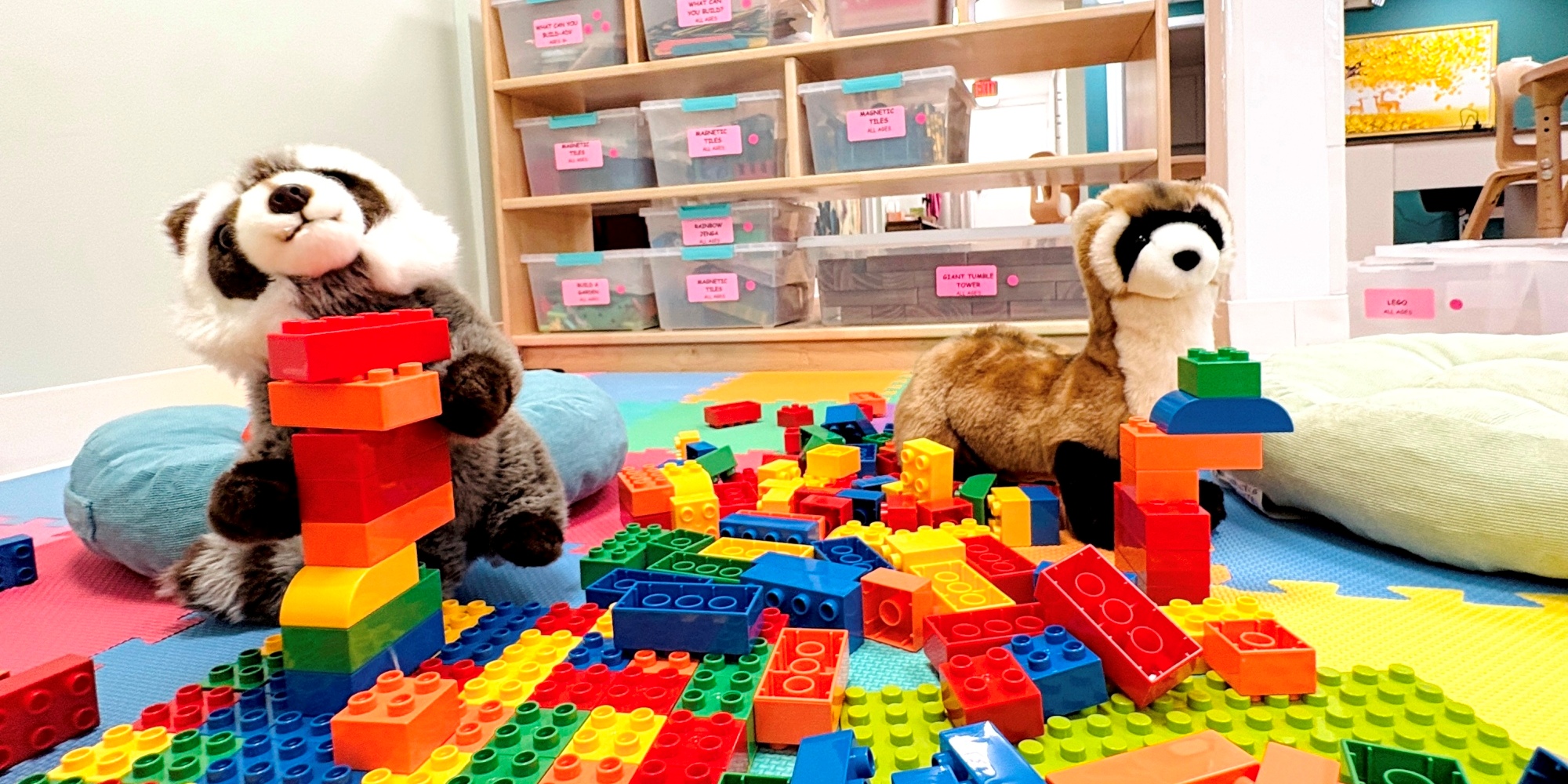
Third Space for Kids is designed to provide the kind of unstructured time that is both purposeful and developmentally meaningful. Our space is thoughtfully stocked with materials that encourage open-ended exploration, creativity, problem-solving, and play alongside children of different ages. It’s the difference between simply telling your child to “go play” and giving them an environment intentionally designed for choice and discovery, with activities that complement many of the skills emphasized throughout early childhood and elementary education.
With a weekly or monthly membership, your child enjoys unlimited drop-in playtime in an adult-supported space, where activities and materials are open for discovery and thoughtfully curated by an educator to support development through purposeful play. Outside food and drinks are also welcome in our space ( no peanuts, please)!
Sources
Barker, J. E., Semenov, A. D., Michaelson, L., Provan, L. S., Snyder, H. R., & Munakata, Y. (2014). Less-structured time in children’s daily lives predicts self-directed executive functioning. Frontiers in Psychology, 5, Article 593.
Colliver, Y., Brown, J. E., Harrison, L. J., & Humburg, P. (2022). Free play predicts self-regulation years later. Early Childhood Research Quarterly, 59, 148–161.
Kaplan, S. (1995). The restorative benefits of nature: Toward an integrative framework. Journal of Environmental Psychology, 15(3), 169–182.
Mahoney, J. L., Harris, A. L., & Eccles, J. S. (2006). Organized activity participation, positive youth development, and the over-scheduling hypothesis. Social Policy Report, 20(4), 3–30.
Nicholson, S. (1971). How not to cheat children: The theory of loose parts. Landscape Architecture, 62, 30–34.
Rhea, D. J., Kirby, K., Cheek, D., Zhang, Y., & Webb, G. K. (2025). The impact of recess on chronic stress levels in elementary school children. Children, 12(7), 865.
Ryan, R. M., & Deci, E. L. (2000). Self-determination theory and the facilitation of intrinsic motivation, social development, and well-being. American Psychologist, 55(1), 68–78.
Yogman, M., Garner, A., Hutchinson, J., Hirsh-Pasek, K., Golinkoff, R. M., AAP Committee on Psychosocial Aspects of Child and Family Health, & Council on Communications and Media. (2018, reaffirmed 2025). The power of play: A pediatric role in enhancing development in young children. Pediatrics, 142(3), e20182058.